


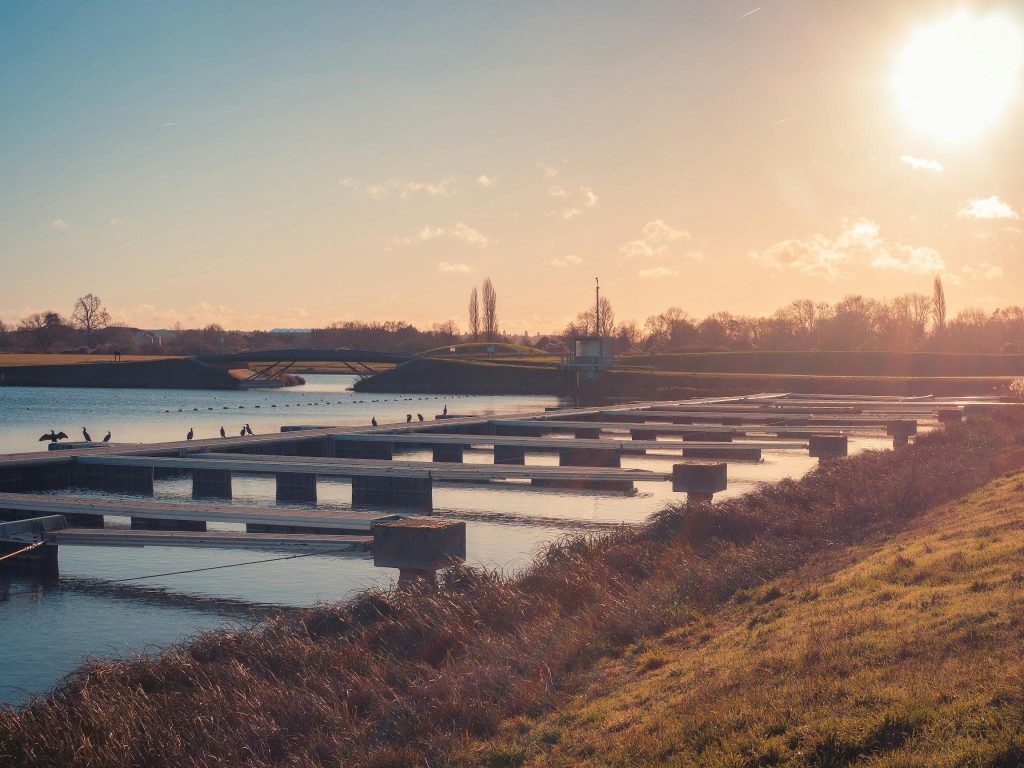
The choice of the right waterfront structure is not only about comparing materials or prices, but also about usage in different conditions. These factors are especially important for projects in Scandinavia, where coastal areas have variable operating conditions.
Floating Pontoon vs Fixed Pier: What Is the Difference?
A floating pontoon is a structure that remains on the water surface, typically fixed to the seabed or connected to the shore. Aluminium floating structures and pontoons are popular due to structural strength, low weight and corrosion resistance. A floating pontoon follows the water level, while a fixed pier is tied.
Why Waterfront Conditions in Scandinavia Matter
Scandinavian waterfront projects are a combination of environmental conditions with a significant effect on structural design. A solution suitable for a sheltered lake is not appropriate for an exposed coastal location.
Norwegian Fjords, Lakes, Rivers and Coastal Locations
Norwegian fjords are characterized by deep water with steep shorelines, while lakes may have relatively calm water. As for the rivers and coastal locations, they are influenced by currents, fluctuating water levels, strong waves and tides. The choice between a floating pontoon or fixed pier depends on the actual site condition.
Changing Water Levels and Tidal Conditions
A floating pontoon can accommodate changing water levels due to the vertical movement of the deck, while a pontoon stays at approximately the same position relative to the water surface.
A fixed pier does not provide such flexibility, and may require additional design measures for practical access. A floating solution provides a simpler and more adaptable approach for locations with substantial water-level fluctuations.
Waves, Currents and Wind Exposure
Floating pontoons are moving with the water, so the anchoring system must allow horizontal movement, allowing vertical movement. The pontoon, connections and anchoring system need to be selected according to the expected environmental loads. Site-specific engineering becomes more important the more exposed the location.
Snow and Ice: What Changes During Nordic Winters in Norway, Sweden, and Finland?
Ice and snow are the typical features of Nordic winters. Depending on the location and expected winter conditions, a floating observation platform can be exposed to ice pressure, additional snow loads and freezing conditions. At the same time, a fixed pier is a permanent installation, which must be designed to withstand the winter loads.
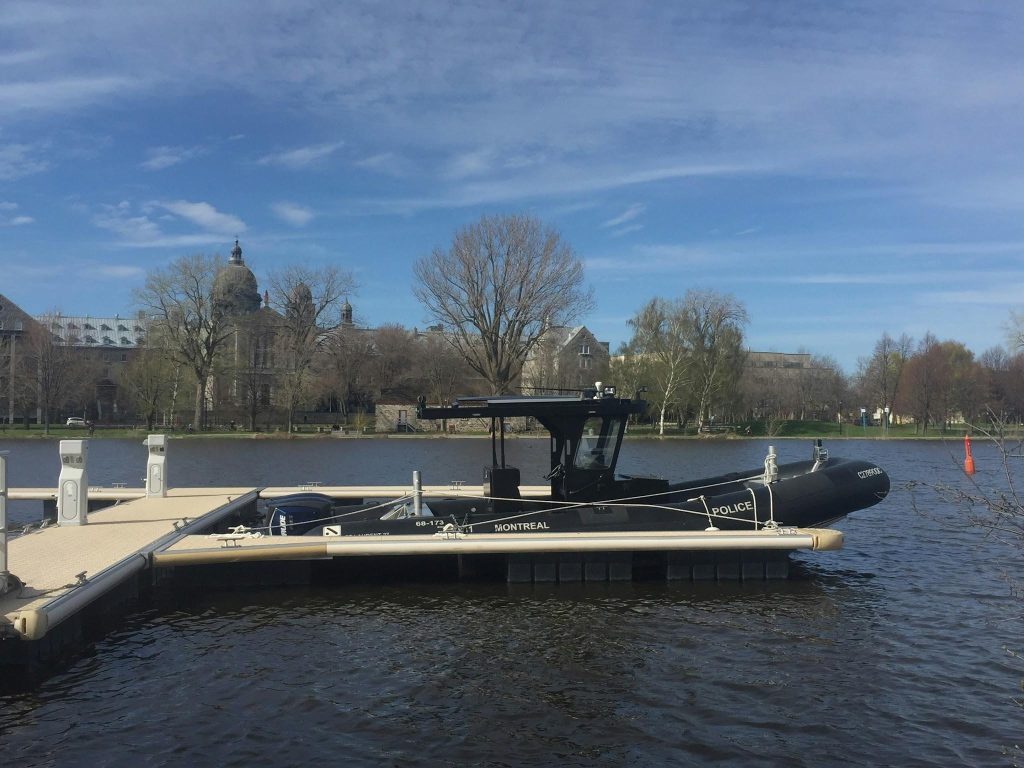
Water Depth and Seabed Conditions
Another major factor is water depth. Foundations or piles that transfer structural loads into the seabed are typically required for fixed piers. As for the floating pontoons, they maintain their position by using anchoring, mooring or guide systems, making the solutions attractive where there is difficult access to the seabed, or where water is relatively deep.
Foundations vs Anchoring and Mooring Systems
There are fundamentally different support systems for these two approaches. In the case of a fixed pier, the key features are as follows:
- permanent foundations such as piles;
- transfer of the structural loads to the seabed;
- significant installation work;
- suitable for stable platforms.
The key features of the floating aluminium jetty are as follows:
- buoyant modules;
- anchoring or mooring systems;
- vertical movement with water level;
- modular construction;
- potential for future expansion.
The correct solution is always done after careful analysis of all the factors.
Accessibility From Shore
A waterfront structure must be safe, so access for a floating pontoon can be provided by connecting the shore to the moving aluminium floating platform. The shore connection for a fixed pier can be simpler due to the relatively stable water level. Accessibility requirements also matter.
Installation in Remote Scandinavian Locations
A major impact on the final project cost is installation logistics. It may be difficult to reach remote fjords, islands and lakes with heavy construction equipment, needed for permanent foundations.
Modular floating dock provides logistical advantages because individual modules are lightweight and delivered as a modular system.
Seasonal Removal vs Year-Round Operation
An important part of the decision is the intended operating season. A floating pontoon may provide an opportunity for seasonal removal or repositioning, depending on the system and site conditions, if it is primarily used during spring and summer. Both floating and fixed floating access platform can be suitable for year-round facilities.
Maintenance Requirements in Norway, Sweden, and Finland
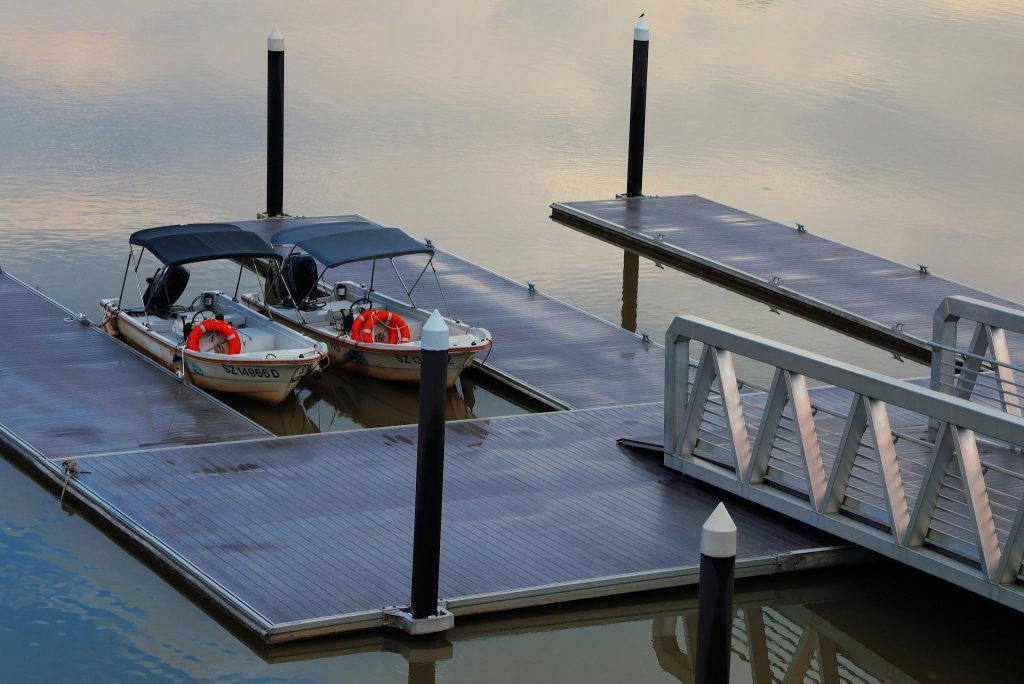
Maintenance matters are considered over the entire service life, not only during the installation period. For floating pontoons, there is the requirement of inspection of floats, connections, hinges, deck modules, gangways and mooring or anchoring components.
As for the fixed piers, they require inspection of the structural elements, deck, piles, underwater components and connections. The specific water environment and appropriate detailing to reduce corrosion-related risks should also be taken into account for floating docks.
Floating Pontoon vs Fixed Pier: Comparison Table
The key features to take into consideration to compare floating pontoon and fixed pier are as follows:
| Factor | Floating pontoon | Fixed pier |
| Changing water level | Better suited | Depends on design |
| Heavy foundations | Usually not required | Often required |
| Modular expansion | Easier | More difficult |
| Stable deck high | Yes | No |
| Very heavy loads | Depends on the design | Often advantageous |
| Deep water | Often attractive | Can increase foundation complexity |
| Difficult seabed | Often advantageous | May require complex foundations |
| Season removal | Potentially easier | Usually not practical |
| Remote installation | Can offer logistical advantages | May require heavy equipment |
| Vertical movement | Follow water level | Fixed elevation |
| Permanent heavy-duty | Depends on design | Often advantageous |
The final choice of the solution should be made after careful evaluation of all the features of the project.
Which Solution Fits Your Scandinavian Waterfront Project?
An aluminium floating service platform is a good choice when low structural weight and modular installation are important. A fixed pier is preferable for high structural loads.
However, these are not universal rules, and the best solution depends on the water depth, combination of location, environmental conditions, intended use and dimensions.
What Information Is Needed to Prepare a Project Proposal?
Planning of the waterfront project is done after analysis of such factors:
- installation’s location;
- waterdiepte;
- required dimensions;
- approximate layout;
- intended use;
- expected operation season;
- information about currents, waves, tides or ice conditions;
- requirements for loads, future expansion, and access.
This information helps to compare a floating pontoon and fixed-pier configuration, and make a final choice. Are you looking for the perfect project planning? Our company is a floating platform supplier, presented on the market for many years. Send us your water depth, location, required dimensions and intended use.