


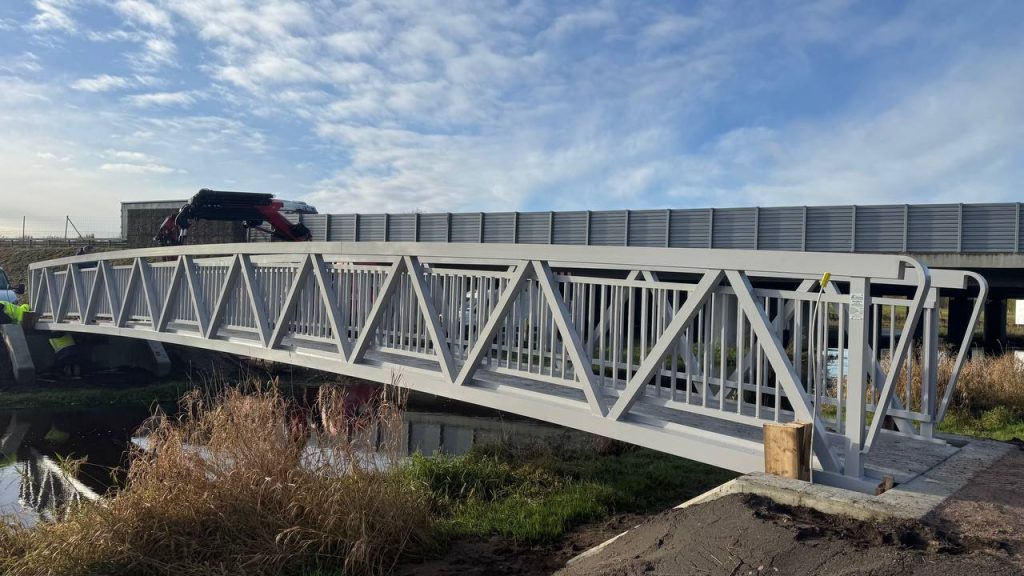
Civil engineers have to adapt their performance strategies, given the international shift in what a high-quality bridge means — region-tailored, climate-proof, and no-maintenance projects for any demand. This transition encourages the exploration of top-tier materials beyond conventional concrete and steel. In this regard, aluminium has emerged as the go-to material for next-gen bridge construction. Given the variety of possible applications, it can be useful in addressing difficulties that both small and large communities may have today, such as escalating maintenance and repair costs, decaying transportation systems, stringent carbon regulations, and other issues.
In this guide, we’ll walk you through the key factors that promote the rising popularity of aluminium bridges across markets. This material is worth considering for achieving your objectives in pedestrian and transportation projects, regardless of whether you are interested in elegant urban sidewalks or industrial bridges.
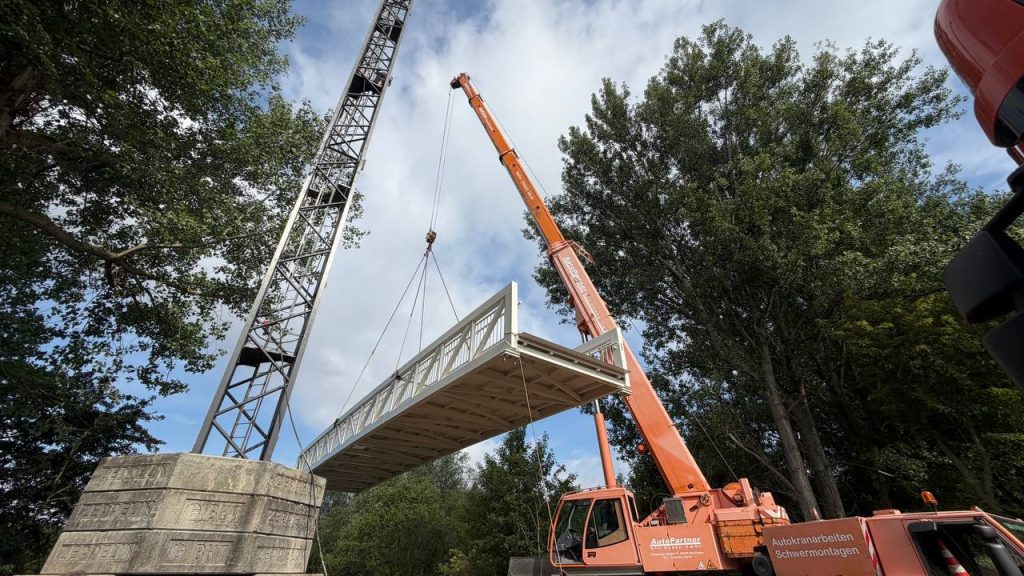
Benefit #1: Lightweight Construction with High Structural Strength
Aluminium can become the key to revolutionising the contemporary construction industry. Several aluminium bridge manufacturers prefer it to alternatives largely for its lightweightness. Its structural strength-to-weight ratio is 296 kN*m/kg compared to 24 kN*m/kg of concrete and 63 kN*m/kg of steel. Basically, you will get approximately the same performance qualities for a less massive and heavier bridge.
Benefit #2: Exceptional Corrosion Resistance
One of the reasons to go for aluminium when discussing the project at hand with your footbridge manufacturer lies in the material’s natural corrosion resistance thanks to its high affinity with oxygen (only surpassed by Beryllium). When exposed to air, such a surface acquires a self-healing layer of aluminium oxide. It functions as an additional protective film in the pH range of 4.5-8.
While this material isn’t corrosion-free and can undergo these natural transformations under certain circumstances, you can take care of its vulnerabilities against chlorides and salts, for instance, with the help of special coatings, anodising techniques, and special design choices.
Benefit #3: Faster Installation and Reduced Project Timelines
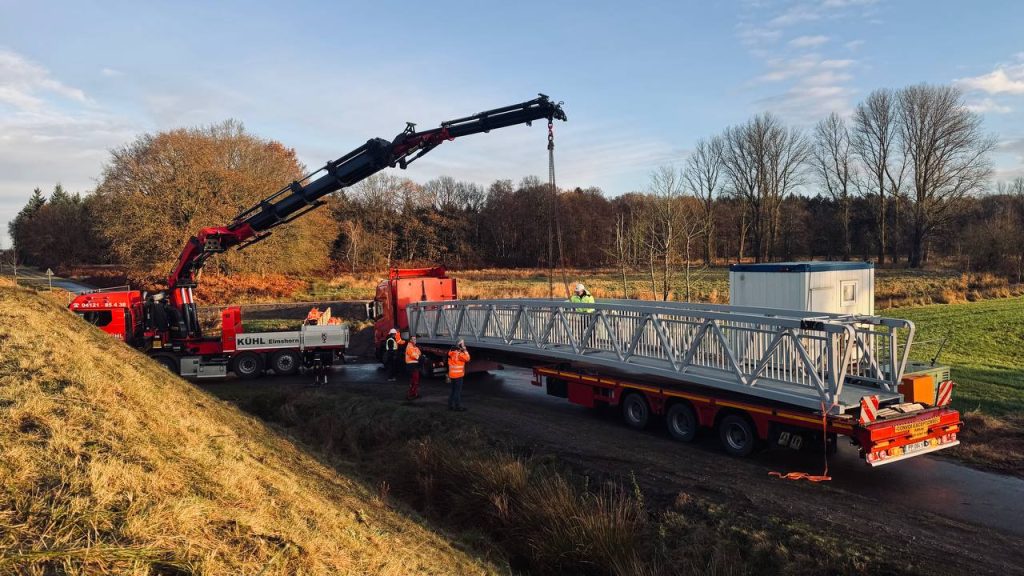
Given that industrial walkways made of aluminium are more lightweight, off-site construction techniques can fully utilise simplified installation methods based on pre-fabricated components. The latter also allows for fewer heavy transport vehicles and smaller cranes to do the job. On a larger scale, quick assemblies support reduced traffic disruption and contribute to faster project execution.
In the case of critical infrastructure failures, aluminium-forward troubleshooting practices reduce the risk of logistical bottlenecks and encourage fast and effective emergency modular bridge replacements. With a minimum machinery footprint in mind, such constructions can be ready for use literally right out of the box.
Benefit #4: Lower Lifetime Maintenance Costs
Cooperating with a trustworthy aluminium engineering company like DR VERSLAS lets you take advantage of the metal’s characteristics in your project to the fullest extent. Given how effective its natural “boundaries” are, it wouldn’t be wrong to expect less trouble and fewer costs to deal with in the long run:
- No moisture absorption, which eliminates the risk of internal structural cracking (unlike what may happen with concrete);
- Resistant to insect, mould, and rot damage, making it a perfect match for several outdoor environments;
- Less stress on supporting structures and foundations, potentially reducing maintenance demands across the entire bridge system;
- No need for frequent corrosion-control treatments;
- Predictable fatigue properties that reduce the risk of localised stress fractures.
Benefit #5: Excellent Performance in Extreme Weather Conditions
Lightweight aluminium structures stand out among conventional “rivals” like concrete and steel. They showcase excellent results where traditional constructions experience damage — extreme cold, high coastal moisture, or fast cycles of freezing-thawing. The metal’s great thermal conductivity eliminates the risk of isolated hot spots, leading to no seismic response amplification and more even load distribution. When combined with sophisticated engineering, these non-porous, modular structures can maintain their structural integrity for decades in a variety of settings.
Benefit #6: Sustainability and Environmental Advantages
If needed, the result of your work with a turnkey bridge contractor can be recycled literally “infinitely”, with a small amount of material lost through oxidation or mill operations. This process requires only 5% of the energy required for primary aluminium production. That’s why around 75% of the metal in this industry is still in use nowadays. Otherwise, the metal’s natural corrosion resistance, lightweightness, and low maintenance overall allow for a long service life of decades of upmarket performance.
Benefit #7: Enhanced Safety and Reliability
Durable aluminium structures support high-end traction for pedestrians and vehicles, largely thanks to premium-class ridge patterns. With their natural oxide layers, hidden moisture build-up won’t be a problem, either. In the case of vehicle fires, the bridge itself won’t experience any serious damage because it’s made of a non-combustible material. Altogether, these factors ensure aluminium’s reliability and effectiveness for public and commercial infrastructure projects of any calibre.
Benefit #8: Design Flexibility for Modern Infrastructure
While a lot depends on your trusted aluminium bridge construction partner, the natural properties of the metal itself allow for a wide range of use. For instance, DR VERSLAS can provide you with a bespoke extrusion profile, a variety of surface treatments, and complex geometric shapes for your project, whether it’s an outdoor stairway, observation platform, floating pontoon, or cycling bridge.
Benefit #9: Enhanced Fatigue Resistance for Long-Term Performance
Advanced Friction Stir Welding (FSW) parameters can significantly elevate the functional value of municipal bridge projects. They promote the construction’s structural integrity in various temperature regimes and high-cycle fatigue situations. The total dead load is significantly reduced since the deck itself is lightweight and naturally reduces the harmful cycle of stress amplitudes experienced during heavy vehicle passages.
Benefit #10: High Adaptability for Future Infrastructure Needs
Custom and CE certified aluminium structures are compatible with a wide range of advanced technologies, including green energy. They support smart sensor integration, as well as on-site construction modifications. Their resilience to multiple climate conditions, simple transportability, and fast installation turn such projects into a go-to solution across various industries.