
 English (UK)
DR VERSLAS is a Lithuanian manufacturer of certified aluminium bridge structures, founded in 2009 and headquartered in Vilnius. Over fifteen years we have grown from a regional supplier into a pan-European contractor, delivering pedestrian bridges, cycle bridges, industrial walkways, floating structures and outdoor staircases across 25 European markets including Germany, Austria, Switzerland, the Netherlands and France.
We work closely with architects, structural engineers and urban planners from the earliest stage of a project. Our engineering team provides Eurocode 9 structural calculations, BIM and CAD models, load class specifications and full declaration of performance documentation — in the format required for design approval, building permit applications and public tender qualification. Every structure is designed to EN 1090 EXC2 execution class and CE-marked, giving design teams and procurement offices the compliance documentation they need without additional third-party verification.
Aluminium is our material of choice for a reason. Its strength-to-weight ratio allows longer spans with shallower profiles, opening design possibilities that steel and concrete cannot match at the same structural weight. The self-protecting oxide layer eliminates painting and recoating across the full service life, which matters for projects in coastal, urban and industrial environments where maintenance access is limited or expensive. For architects specifying structures intended to last fifty to eighty years with minimal visual change, anodised aluminium delivers both the aesthetic and the engineering performance.
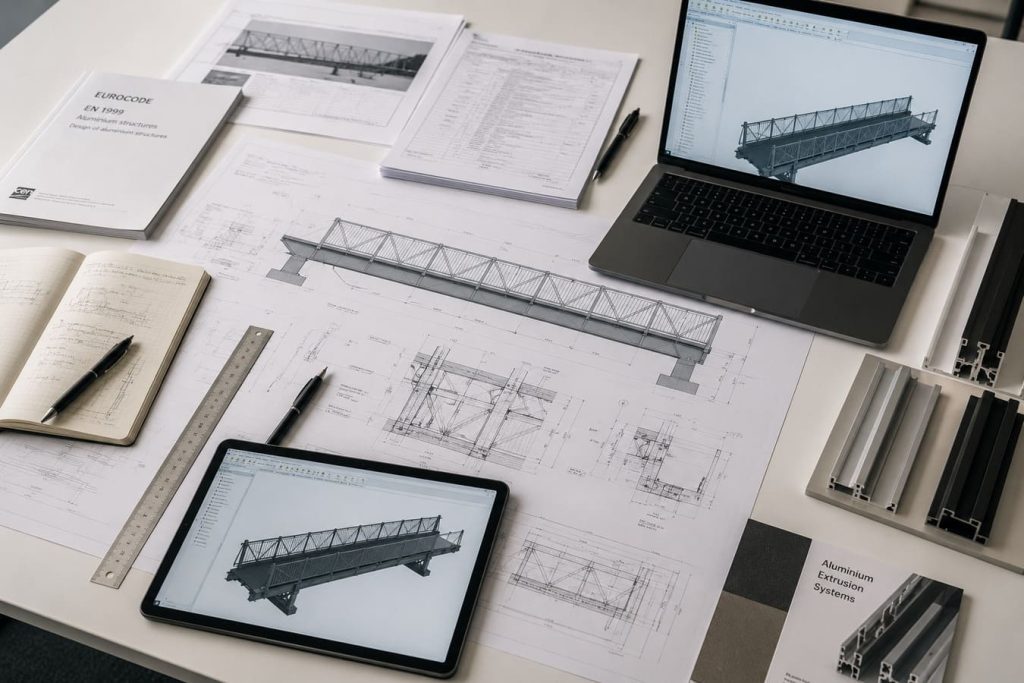
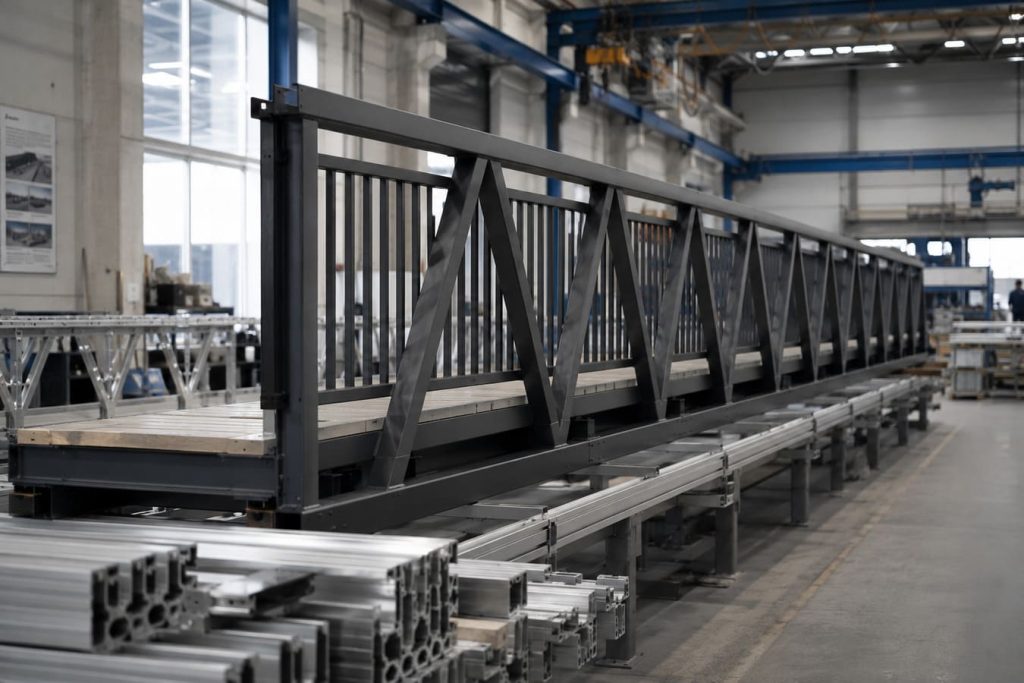
DR VERSLAS delivers most projects on a turnkey basis — structural design, fabrication, transport and on-site installation by our own team. Structures are manufactured in modular sections at our Vilnius production facility, loaded for direct delivery to site and assembled using bolted connections that require no on-site welding. A typical 20 to 40 metre pedestrian bridge is installed in two to five days from delivery. For live-traffic and railway crossing locations, overnight and weekend installation programmes are available, keeping road and rail disruption to a single shift.
For civil contractors and construction managers who prefer to handle installation in-house, we supply structures with complete assembly drawings, torque specifications, EN 1090 execution documentation and a site supervisor from our team to certify the completed assembly meets execution class requirements. This model is common on larger infrastructure programmes where the main contractor holds the installation contract but requires manufacturer certification for the handover package. Foundation design loads, anchor bolt layouts and bearing specifications are supplied at quotation stage, allowing groundworks to proceed in parallel with fabrication and reducing overall programme time.
Numbers, execution classes, welding processes and downloadable PDFs for all three certificates are set out on the certificates page.
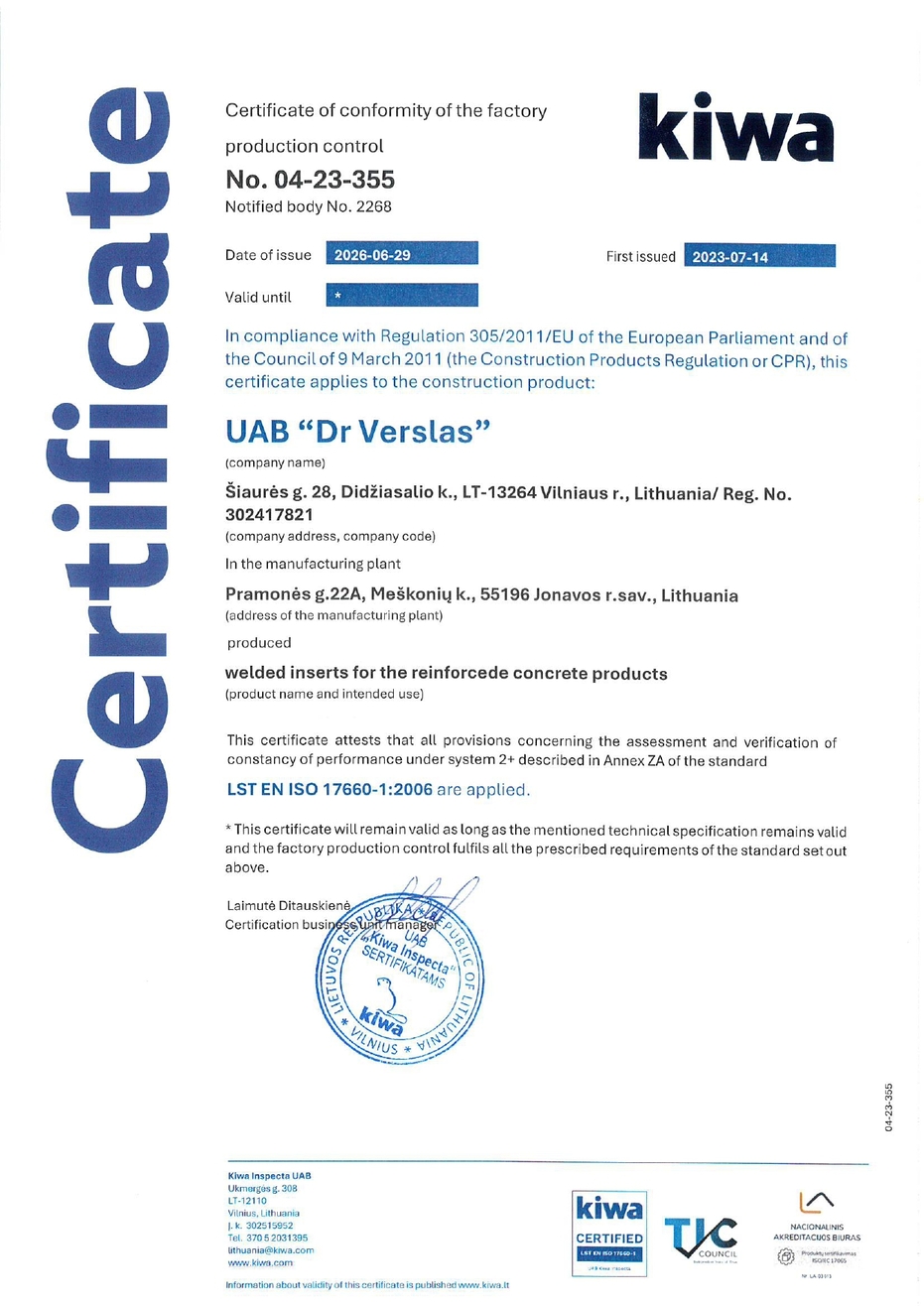
Factory Production Control (FPC) certificate for welded inserts used in reinforced concrete products, issued by Kiwa in accordance with the Construction Products Regulation (CPR 305/2011).
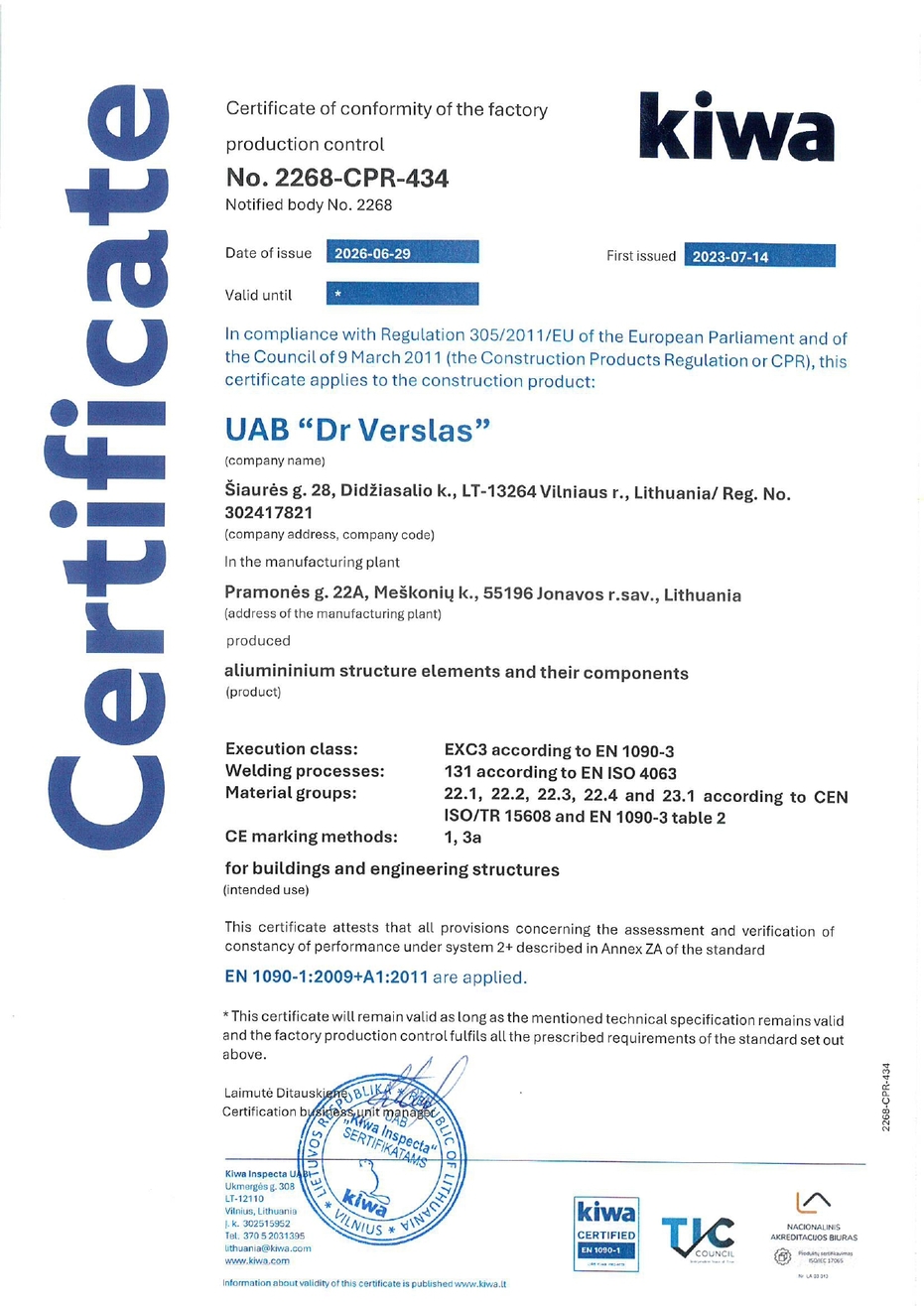
Factory Production Control (FPC) certificate for aluminium structure elements and components manufactured for buildings and civil engineering works. Certified to EN 1090 with Execution Class EXC3.
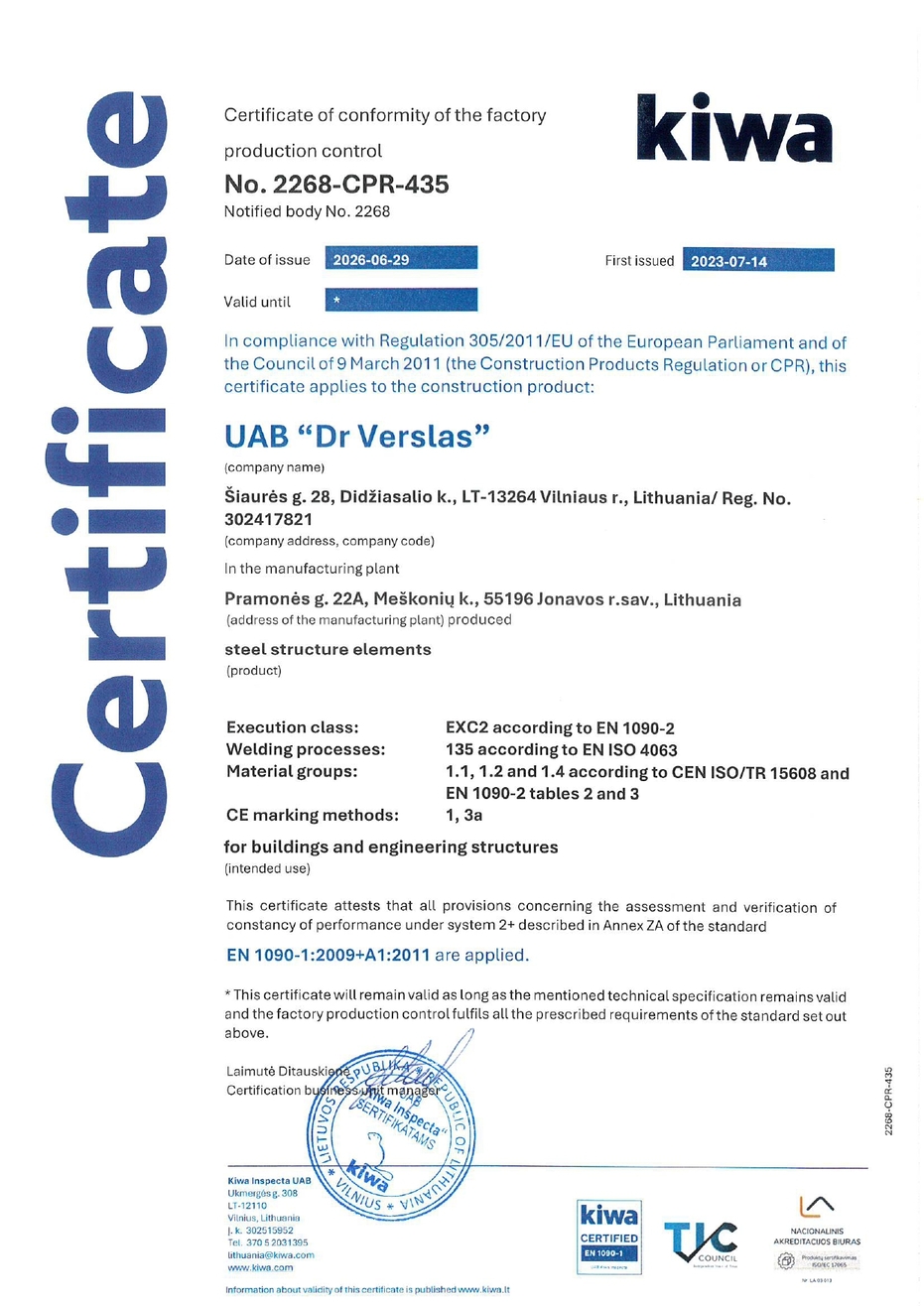
Factory Production Control (FPC) certificate for steel structure elements manufactured for buildings and civil engineering works. Certified to EN 1090 with Execution Class EXC2.


