


The initial purchase price is often the key factor when planning a new pedestrian, cycling, or traffic bridge for infrastructure owners, municipalities, engineering companies, and contractors. However, the lowest price is not the direct representation of the most economical solution over the structure’s entire service life.
A bridge as a long-term infrastructure investment must provide safety and reliability under high loads for decades. The key factors for owners during this period are:
- maintenance,
- repairs,
- inspections,
- operational disruptions,
- end-of-life recycling.
These costs together form the bridge’s lifecycle cost (LCC) — the total cost of owning, operating, and maintaining the structure.
Aluminium bridge in comparison to a steel alternative, it is important to look beyond the initial quotation. Material selection affects transportation, installation, maintenance requirements, corrosion protection, and future operational costs. Lifecycle cost analysis is a must to get a complete understanding of the true value of a bridge investment.
What Is Included in a Bridge’s Lifecycle Cost?
A bridge’s lifecycle cost consists of all expenses associated with the structure within the operational period, and the initial manufacturing cost is only a part of the total investment, which consists of:
- design and engineering;
- material production;
- certification and quality control;
- transportation;
- foundations;
- supporting structures;
- installation;
- inspections and preventive maintenance;
- repairment;
- access restrictions;
- recycling.
Infrastructure owners must consider the variability of total cost depending on the location of the bridge, environmental influence, the usage loads, and selected construction material.
Considerably higher long-term costs are expected for the bridge located near the coast with high humidity, or with difficult maintenance access.
That’s why for modern infrastructure projects total cost of ownership (TCO) is more meaningful than the initial purchase price.
Is the Initial Cost of an Aluminium Bridge Engineering Higher Than Steel?
Steel is a traditional material with a competitive initial cost for construction. Aluminium as a material for bridges requires a higher upfront investment, but material price is not the only factor that provides a complete picture of the overall project cost.
Aluminium is a lightweight material, so the structure provides the required structural performance, being significantly lighter than steel solutions, creating conditions for savings in such areas of the project, such as:
- reduced requirements for transport;
- smaller requirements for lifting equipment;
- easier installation;
- less load on foundations;
- shorter period to maintain construction.
The final project cost of aluminium bridges in most cases is much more affordable.
| Cost factor | Aluminium bridge | Steel bridge |
| Initial material cost | Higher | Lower |
| Structural weight | Lower | Higher |
| Transportation costs | Often reduced | Often higher |
| Installation speed | Faster | Longer |
| Corrosion resistance | Naturally resistant | Requires additional protection |
| Repainting requirements | Generally minimal | Required |
| Long-term maintenance | Lower | Higher |
That’s why it’s essential for procurement teams to make the comparison of the total installed cost, not only the price of the supplier.
How Do Transport, Foundations and On-Site Installation Affect Total Cost?
Logistics and construction requirements are directly influenced by the weight of the bridge.
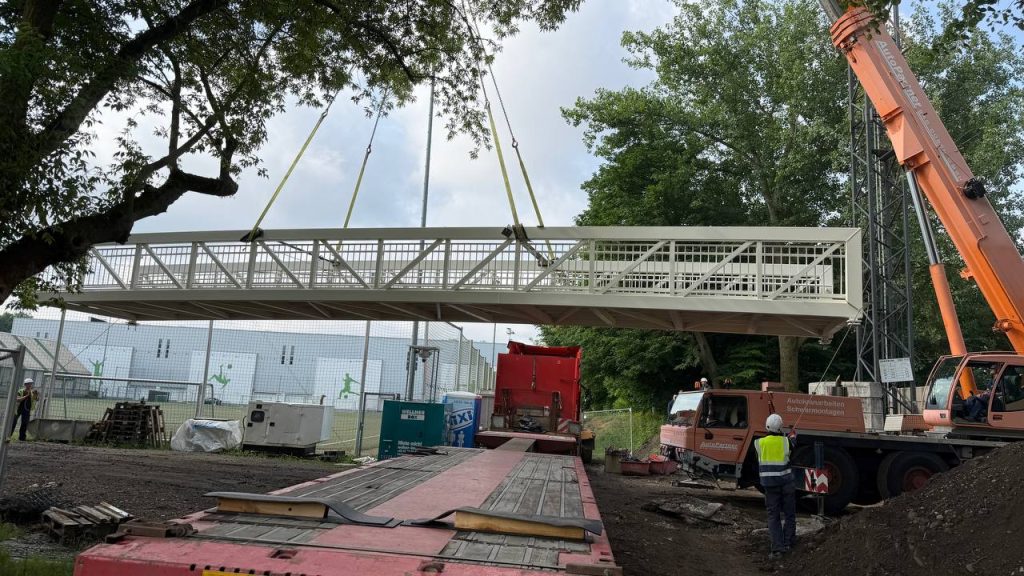
Transportation of an aluminium bridge can often be simplified due to the lighter weight than steel alternatives. An installation can become more efficient due to the requirement of fewer transport resources, especially within limited space.
A lighter structure reduces the overall complexity of installation works, bringing such results as:
- less disruption to surrounding areas;
- lower labour costs;
- reduced requirements for crane capacity;
- faster assembly;
- shorter construction schedules.
Shorter installation periods are beneficial for municipalities, reducing inconvenience for residents and users. Additionally, faster installation helps contractors minimise project risks.
As for the foundation, a lighter bridge structure reduces permanent loads, influencing the overall construction cost.
Each project requires individual evaluation, but in general, aluminium structures are more economical solutions in the context of logistics, access, and installation time.
How Do Corrosion Protection and Repainting Affect Lifecycle Costs?
One of the key differences between aluminium and traditional steel bridges is corrosion protection.
Protective coating systems are essential for steel structures to prevent corrosion. The coatings must be regularly inspected depending on environmental conditions and renewed in time.
The maintenance activities of a steel bridge, which create both direct and indirect costs, may include:
- the preparation of the surface;
- timely removal of damaged coatings;
- repainting;
- restrictions during maintenance work.
The maintenance of aluminium bridges is radically different. This material for bridge engineering is characterized by a protective oxide layer, resistant against corrosion in many environments. Aluminium structures do not require the same repainting cycles as steel ones, being suitable for:
- coastal areas;
- waterfront projects;
- parks and recreational zones;
- routes for cycling;
- locations with challenging maintenance access.
The cost of the corrosion protection for aluminium constructions is predictably lower, and there are fewer long-term operational expenses.
How Do Inspection, Repair and Traffic Closure Costs Influence Long-Term Value?
Continued safety and performance of the bridge is ensured by regular inspections. The lifecycle costs can be significantly affected by the frequency and type of maintenance.
The inspections for steel bridges are focused on:
- coating condition;
- corrosion risks;
- analysis of moisture areas.
Additional maintenance activities and possible service restrictions may appear in case of identified deterioration. Long-term maintenance planning can be simplified due to the reduced corrosion risk of aluminium bridges. This fact becomes an additional benefit for owners who can focus on structural inspections and normal operational requirements despite corrosion prevention measures, and get:
- predictable budgets;
- reduced disruption;
- low administrative workload;
- improved asset management planning.
These facts are especially valuable for public infrastructure owners when they apply to an aluminium construction company, because long-term maintenance costs are easier to forecast.
What Role Do Recycling and Residual Material Value Play at the End of a Bridge’s Life?
Sustainability gets increasingly higher significance within infrastructure projects across Europe. Both aluminium and steel are recyclable materials, but the economical position of aluminium structures is particularly stronger because recycled material retains significant material value and requires less energy in comparison to producing primary aluminium.
Recycling at the end of the bridge’s service life is contributive to:
- environmental protection;
- lower construction waste;
- material value recovery.
The consideration of end-of-life value creates a more complete understanding of the overall economic and environmental performance of the recyclable aluminium structures.
When Is an Aluminium Bridge the Better Investment?
An aluminium bridge is not the only option for every project. The choice of the material should be made depending on location, technical requirements, environment, and budget priorities. But the strong lifecycle advantages of aluminium can’t be denied for projects which require:
- minimal maintenance with long service life;
- corrosion resistance;
- simple installation;
- reduced disruption of construction;
- lightweight structures;
- predictable long-term costs.
Aluminium is a preferable choice for cycling infrastructure, pedestrian bridges, waterfront projects, park connections, and locations with limited maintenance access.
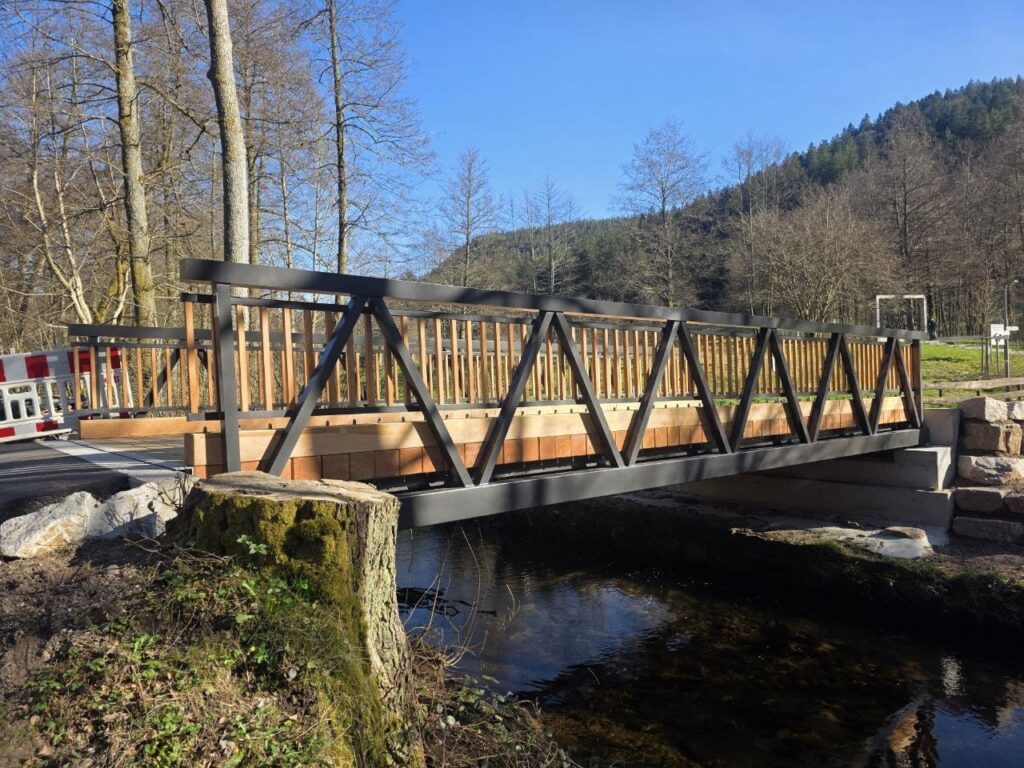
For example, The Walke Bridge over the Forbach in Baiersbronn, Germany, is an aluminium pedestrian bridge over river, being a durable and low-maintenance construction. The project was designed by the company as a turnkey bridge contractor for pedestrian use, being characterized by reliability, durability, and lifecycle performance.
What Questions Should You Ask Before Comparing Supplier Quotes?
Project owners should evaluate more than the initial quotation before selecting aluminium infrastructure solutions from the supplier. The list of important questions is as follows:
- What are the maintenance requirements within the bridge’s service life?
- What is the performance of the material in the exact environment?
- Is there a need for corrosion protection systems?
- How long will it take to install the construction?
- Can the supplier provide approximate lifecycle cost information?
A detailed comparison is needed to ensure the right decision of bridge installation, based on long-term value, not on the lowest initial price.
Conclusion: Why Should You Compare Total Cost Instead of Purchase Price?
The investment in the bridge design is made for decades. The essential parts of the decision-making process are maintenance requirements, corrosion resistance, installation efficiency, and recycling value.
Aluminium structures guarantee a strong balance between durability and cost efficiency for many pedestrian and cycling infrastructure projects.
Are you planning a bridge project? DR VERSLAS is an aluminium bridge contractor which provides a preliminary lifecycle cost comparison based on the individual requirements of your project, helping you make the right decision.