


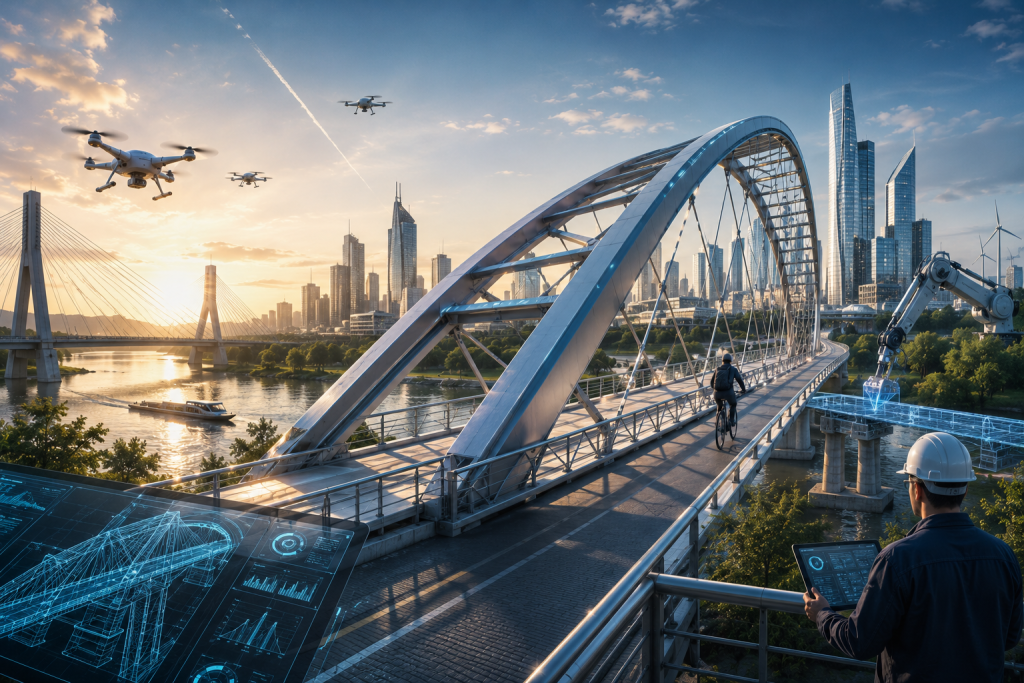
Bridges have always been a symbol of engineering progress. From ancient stone arches to today’s sophisticated steel and aluminium structures, they have connected communities, supported economic growth, and enabled the development of modern transportation networks. However, the demands placed on infrastructure today are fundamentally different from those of just two or three decades ago.
Modern bridge projects are expected to deliver far more than structural performance. Infrastructure owners, municipalities, engineers, and contractors must create bridges that are not only safe and capable of carrying increasing traffic loads but also durable, cost-efficient throughout their entire service life, environmentally responsible, and adaptable to future operational requirements.
At the same time, the bridge engineering industry is undergoing a profound technological transformation. Digital technologies, artificial intelligence, advanced construction methods, and innovative structural materials are redefining how bridges are designed, built, and maintained. Over the next decade, these innovations will become standard practice, fundamentally changing the way infrastructure is delivered across Europe and beyond.
BIM Is Becoming the Foundation of Modern Bridge Design
Traditional bridge design has long relied on two-dimensional drawings and separate engineering disciplines working independently. While this approach has served the industry for decades, it often resulted in design inconsistencies, communication challenges, and costly modifications during construction.
Today, Building Information Modeling (BIM) is transforming this process.
Rather than producing a collection of drawings, BIM creates a comprehensive digital representation of the bridge. The model contains not only geometric information but also detailed data about structural components, construction materials, connections, fabrication processes, installation sequences, maintenance requirements, and future inspections.
The real value of BIM lies far beyond three-dimensional visualization. It provides engineers with a collaborative environment where architects, structural engineers, manufacturers, contractors, and infrastructure owners work from a single coordinated model throughout the entire project lifecycle.
Every modification made within the model is automatically reflected across all related disciplines. This significantly reduces the likelihood of design conflicts, improves coordination between project teams, and minimizes expensive changes during construction.
For infrastructure owners, BIM also provides greater confidence in project planning. Construction schedules become more predictable, cost estimates become more accurate, and potential risks can often be identified before work begins on site.
As governments continue investing in large-scale infrastructure, BIM is increasingly becoming a mandatory requirement for public projects. Across many European countries, digital project delivery has already become standard practice, enabling higher-quality engineering while improving transparency and long-term asset management.
Digital Twins Enable Real-Time Infrastructure Management
While BIM has transformed the design and construction phases, another technology is changing how bridges are managed after completion: the Digital Twin.
Although the terms are sometimes used interchangeably, they serve different purposes.
A BIM model represents how a bridge is designed and constructed. A Digital Twin, however, continues evolving throughout the bridge’s operational life by continuously receiving information from the physical structure itself.
Modern bridges can be equipped with networks of sensors that monitor structural behaviour around the clock. These systems collect data on traffic loads, vibrations, structural movements, temperature fluctuations, humidity, wind exposure, and many other performance indicators.
The information is transmitted directly to the bridge’s digital twin, allowing engineers to observe the structure’s condition in near real time.
This continuous flow of data fundamentally changes infrastructure management.
Instead of relying solely on periodic visual inspections, engineers can identify unusual structural behaviour long before visible damage appears. Small deviations that might otherwise go unnoticed for years can be detected early, allowing maintenance teams to intervene before they develop into expensive repairs.
This approach is commonly referred to as predictive maintenance.
Rather than repairing damage after it occurs or performing maintenance according to a fixed schedule, infrastructure owners can plan interventions based on the actual condition of the bridge. This significantly reduces maintenance costs, minimizes unexpected closures, and extends the service life of the structure.
Digital Twins also provide valuable long-term insights. By analysing years of operational data, engineers can better understand how bridges respond to traffic growth, changing environmental conditions, and ageing materials. These findings not only improve maintenance planning but also influence the design of future bridge projects.
As sensor technology becomes more affordable and data analytics continue to advance, Digital Twins are expected to become an integral component of bridge asset management strategies across Europe.
For municipalities and infrastructure operators, this represents a major shift—from reacting to problems after they occur to managing bridges proactively throughout their entire lifecycle.
Artificial Intelligence Is Becoming an Engineer’s Decision-Support Tool
Only a few years ago, artificial intelligence was widely regarded as a technology with future potential rather than a practical engineering solution. Today, that perception is rapidly changing. AI is increasingly being integrated into bridge engineering, helping professionals analyse vast amounts of technical data and develop more efficient design solutions.
Designing a bridge requires engineers to consider a remarkable number of variables simultaneously. Geological conditions, soil characteristics, traffic volumes, environmental loads, climate, material properties, construction methods, budget constraints, and regulatory requirements all influence the final design. Evaluating these factors manually is both time-consuming and increasingly complex as infrastructure projects become larger and more sophisticated.
Artificial intelligence can process thousands of design scenarios within a fraction of the time required using traditional methods. Instead of replacing engineering expertise, AI assists professionals by identifying optimal structural configurations, reducing material consumption, improving constructability, and evaluating long-term operational performance.
Machine learning algorithms can also analyse historical project data, allowing engineers to compare new concepts with the performance of existing bridges under similar conditions. This supports better-informed decisions during the early stages of design, when changes are both easier and less expensive to implement.
In the coming years, the role of AI is expected to expand well beyond structural optimisation. Combined with Digital Twin technology, artificial intelligence will increasingly support predictive maintenance by identifying early signs of deterioration, estimating the remaining service life of critical components, and recommending the most cost-effective maintenance strategies.
Rather than replacing engineers, AI is becoming a powerful decision-support tool that enables more accurate, data-driven infrastructure planning.
Advanced Aluminium Alloys Are Expanding Design Possibilities
While digital technologies are transforming the design process, advances in materials science are equally reshaping modern bridge engineering.
For decades, steel has been the dominant structural material for bridge construction. It continues to play a crucial role in many large infrastructure projects, but evolving performance requirements have encouraged engineers to consider alternative materials that offer greater durability, lower maintenance demands, and improved lifecycle performance.
Modern aluminium alloys have emerged as one of the most promising solutions.
Continuous improvements in alloy composition and manufacturing technologies have significantly enhanced the mechanical properties of aluminium. Today’s structural aluminium offers high strength-to-weight ratios, excellent fatigue performance, and outstanding resistance to corrosion, making it suitable for a wide range of bridge applications.
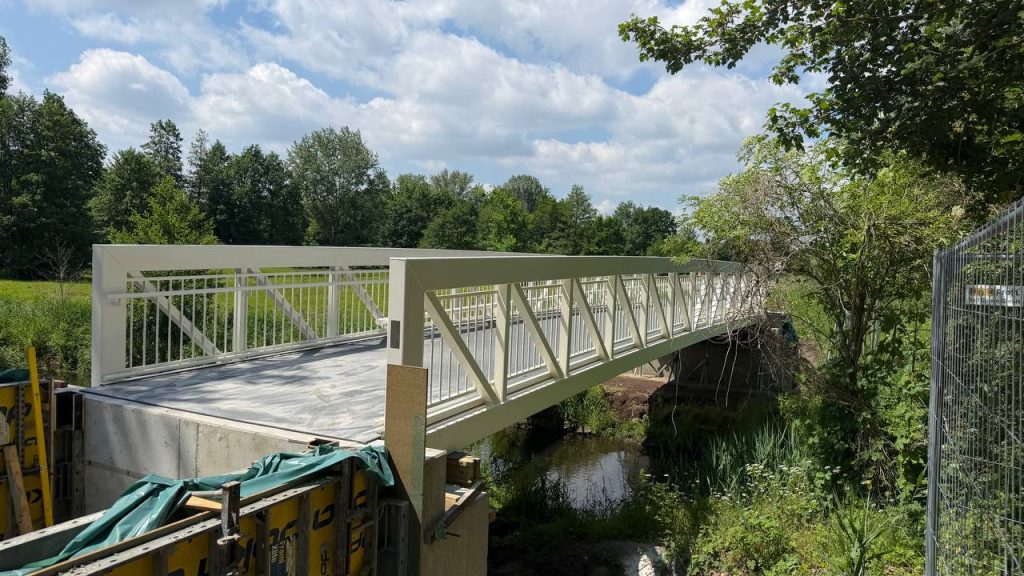
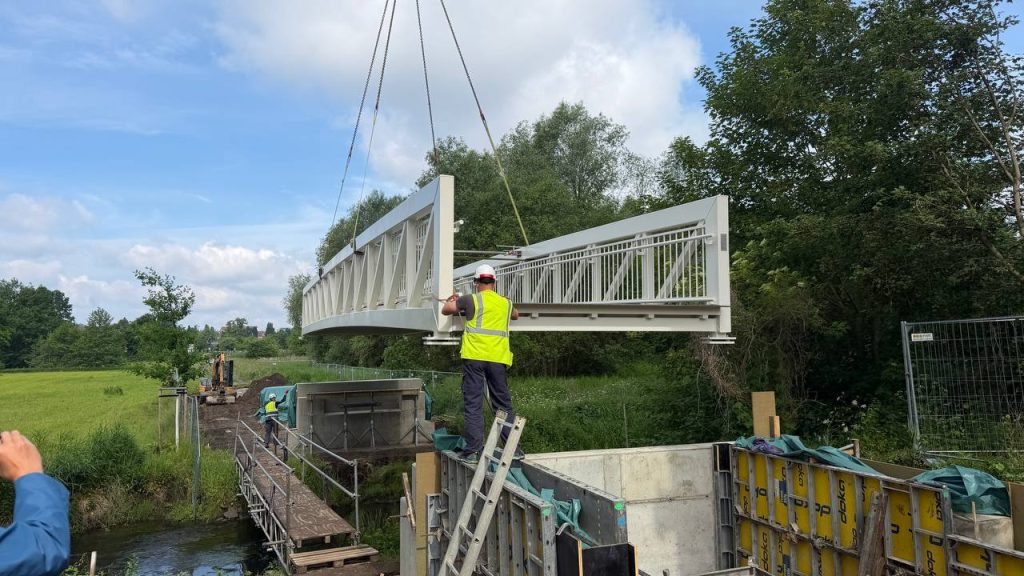
One of aluminium’s most significant engineering advantages is its low density. Compared with conventional structural steel, aluminium structures are considerably lighter while still providing the required structural performance. Reduced self-weight decreases loads on foundations and supporting structures, simplifies transportation, and often allows bridges to be installed using smaller lifting equipment.
These characteristics are particularly valuable when replacing existing bridges or constructing new structures in locations where access is limited or heavy equipment cannot easily be deployed.
Another important advantage is aluminium’s natural resistance to corrosion.
Unlike steel, which requires protective coatings to prevent rust, aluminium forms a thin oxide layer that protects the surface from further corrosion. In most environments, this natural protective barrier significantly reduces maintenance requirements throughout the bridge’s service life.
As infrastructure owners increasingly evaluate projects based on Life Cycle Cost (LCC) rather than initial construction cost alone, materials requiring less maintenance become increasingly attractive.
This is one of the reasons why aluminium bridges are becoming more common for pedestrian bridges, cycle bridges, industrial walkways, observation platforms, and other infrastructure projects where long-term durability and reduced maintenance are major priorities.
Modular Construction Is Transforming Project Delivery
Another trend rapidly gaining momentum across the infrastructure sector is modular bridge construction.
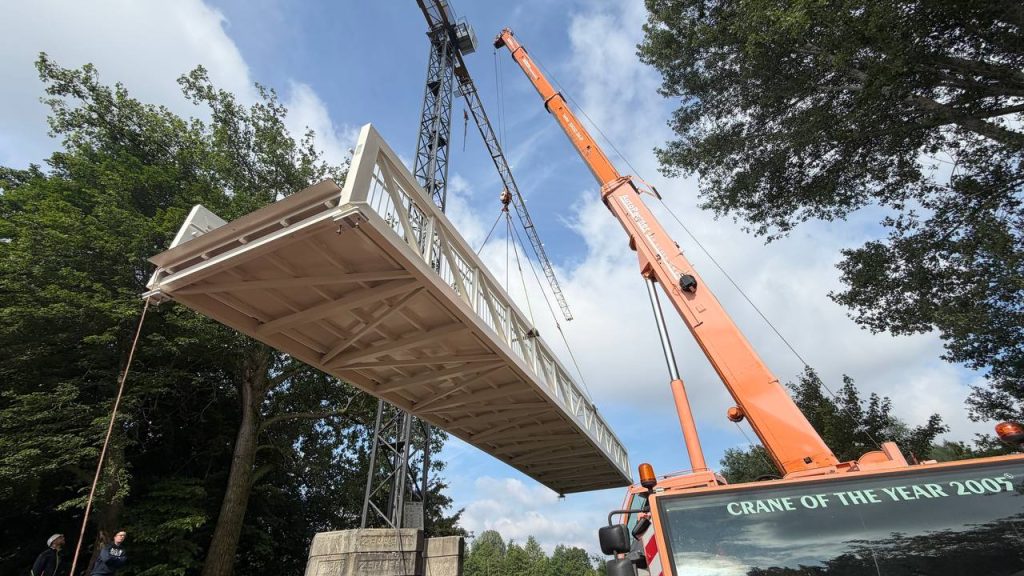
Rather than assembling every component on-site, engineers increasingly manufacture major structural elements in highly controlled factory environments before transporting them to the construction site for final assembly.
This approach fundamentally changes the way bridge projects are delivered.
Factory production offers much tighter quality control than traditional on-site fabrication. Environmental conditions remain stable, manufacturing processes are standardised, and precision can be maintained throughout production. As a result, structural components often achieve higher manufacturing quality while reducing the risk of construction errors.
The benefits extend well beyond manufacturing.
Because much of the work is completed before components arrive on site, installation times can be dramatically reduced. For busy urban areas, this represents a significant advantage. Shorter construction periods mean fewer road closures, less disruption to traffic, reduced noise for nearby communities, and lower indirect economic costs associated with transport delays.
Modular construction also improves safety. Much of the fabrication takes place in controlled industrial facilities rather than in challenging on-site conditions, reducing exposure to weather, traffic, and other construction hazards.
Combined with lightweight materials such as aluminium, modular construction enables infrastructure owners to complete projects more efficiently while maintaining high standards of quality and safety.
As urban populations continue to grow and transportation networks become increasingly congested, the ability to deliver bridge projects quickly and with minimal disruption will become an even more important competitive advantage for infrastructure developers.
Intelligent Structural Monitoring Is Replacing Traditional Inspections
For decades, bridge maintenance has relied primarily on scheduled visual inspections. While this approach remains essential, it also has its limitations. Structural changes can occur between inspection intervals, and early signs of deterioration may remain undetected until they become visible or require costly repairs.
Modern Structural Health Monitoring (SHM) systems are changing this approach by providing continuous insight into a bridge’s condition throughout its operational life.
Today’s bridges can be equipped with integrated sensor networks that continuously monitor structural behaviour, measuring parameters such as load distribution, vibrations, strain, displacement, temperature variations, and environmental influences. Instead of relying solely on periodic inspections, engineers receive real-time performance data that reflects how the structure behaves under actual operating conditions.
This continuous monitoring enables infrastructure owners to identify anomalies at a much earlier stage than would be possible through visual inspections alone. Small structural changes can be investigated before they develop into significant defects, allowing maintenance work to be planned proactively rather than reactively.
The result is not only improved safety but also a more efficient use of maintenance budgets. Resources can be directed to structures that genuinely require attention, while unnecessary inspections and emergency interventions can be reduced.
As sensor technologies continue to evolve and become more affordable, intelligent monitoring systems are expected to become a standard feature of both new bridge projects and the modernisation of existing infrastructure.
Sustainability Has Become a Core Design Requirement
Sustainability is no longer viewed as an additional benefit—it has become a fundamental requirement in modern infrastructure planning.
Today, the success of a bridge project is measured not only by its construction cost or structural performance but also by its environmental impact throughout its entire service life. Governments, municipalities, and infrastructure owners are increasingly evaluating projects using Life Cycle Assessment (LCA) methodologies, which consider carbon emissions, resource consumption, maintenance requirements, recyclability, and long-term environmental performance.
This shift reflects a broader change in the engineering industry. Rather than focusing solely on initial investment, decision-makers now consider how a bridge will perform over several decades and how its maintenance requirements will affect both operational budgets and environmental sustainability.
Material selection plays a crucial role in this process.
Aluminium offers several characteristics that align with modern sustainability objectives. It is highly recyclable and can be repeatedly reused without significant loss of mechanical properties. In addition, its natural corrosion resistance reduces the need for protective coatings, frequent repainting, and extensive maintenance activities—all of which contribute to lower resource consumption over the bridge’s lifecycle.
As environmental regulations become increasingly demanding across Europe, lifecycle performance is becoming just as important as structural performance.
Automation Is Transforming Bridge Construction
Automation is rapidly becoming an integral part of modern bridge construction and manufacturing.
Advanced robotic welding systems, automated metal processing, laser scanning technologies, unmanned aerial vehicles (UAVs), and high-precision surveying equipment are already being used on infrastructure projects around the world. These technologies improve manufacturing accuracy, increase productivity, and reduce the potential for human error during both fabrication and construction.
Drones, for example, are now widely used for bridge inspections, particularly in locations that are difficult or hazardous for personnel to access. High-resolution imaging, LiDAR scanning, and photogrammetry enable engineers to assess structural conditions quickly while reducing both inspection time and operational risk.
Automation is also improving quality assurance during fabrication. Computer-controlled manufacturing processes ensure greater consistency, allowing complex structural components to be produced with exceptional precision.
As digital technologies continue to advance, automation will play an even greater role—not only during construction but throughout the entire lifecycle of bridge infrastructure.
What These Developments Mean for Infrastructure Owners
For municipalities, engineering consultancies, contractors, and infrastructure owners, these technological advances represent far more than incremental improvements. They are changing the way bridges are conceived, delivered, and managed.
Modern bridges are increasingly designed as intelligent infrastructure assets rather than static structures. Digital technologies enable continuous monitoring, predictive maintenance, and data-driven decision-making throughout the bridge’s operational life.
At the same time, procurement strategies are evolving. Instead of focusing solely on initial construction costs, owners are increasingly evaluating projects based on Total Cost of Ownership (TCO) and Life Cycle Cost (LCC). This broader perspective recognises that long-term maintenance, operational efficiency, durability, and sustainability often have a greater impact on overall project value than the initial capital investment.
These changing priorities are also influencing material selection. Lightweight, corrosion-resistant aluminium structures are becoming increasingly attractive for pedestrian bridges, cycle bridges, industrial walkways, observation platforms, and other infrastructure projects where durability, rapid installation, and reduced maintenance costs are essential.
Looking Ahead
The next decade will bring one of the most significant transformations in the history of bridge engineering.
Technologies such as Building Information Modeling (BIM), Digital Twins, Artificial Intelligence, Structural Health Monitoring, advanced automation, modular construction, and innovative aluminium alloys are already shaping a new generation of infrastructure. As these technologies mature and become more widely adopted, they will redefine industry standards for efficiency, resilience, sustainability, and lifecycle performance.
The bridges of the future will be more than transportation links. They will function as intelligent, connected infrastructure assets capable of monitoring their own condition, supporting predictive maintenance strategies, and adapting to changing operational demands over many decades.
Organisations that embrace these innovations today are not simply adopting new technologies—they are investing in infrastructure that is safer, more durable, more sustainable, and better prepared to meet the challenges of tomorrow.
For forward-looking bridge manufacturers and engineering companies, the future is not something to anticipate—it is something to build.