


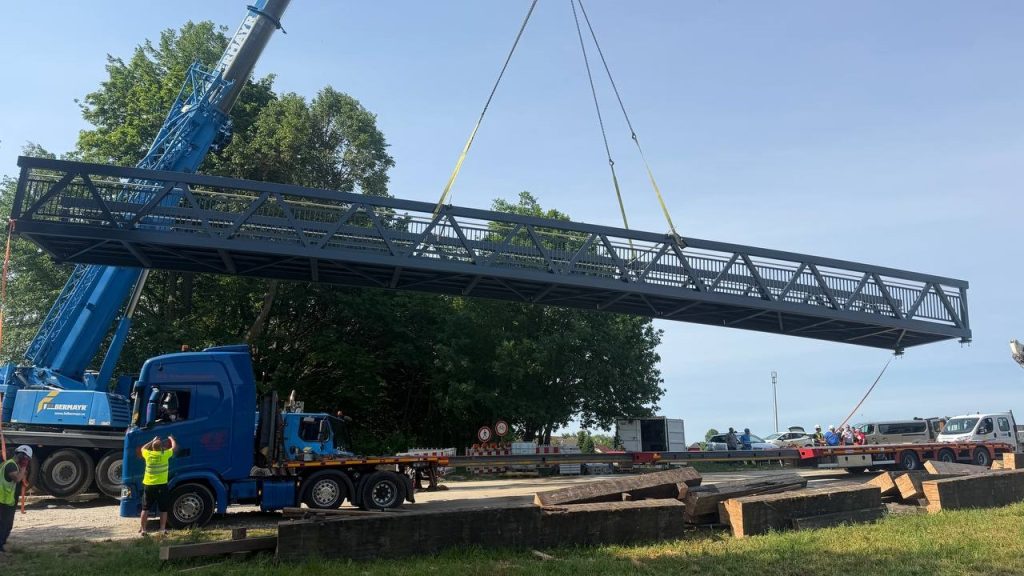
Public procurement of aluminium structure is more than a choice of the lowest bid. Contracting authorities must guarantee that the manufacturer characteristics comply with European regulations, quality requirements and technical standards, whether it’s pedestrian/cycle industrial bridges, observation decks, or any other infrastructure solution. A well-prepared procurement checklist is a must for public agencies, municipalities, consultants, engineers, and industrial contractor to evaluate suppliers with objective criteria.
A clear checklist for manufacturers is a way to simplify the overall tender process, demonstrating compliance from the earliest project stages. The buyers, in their turn, get transparency, minimize costly design revisions, and support safety and durability. The key requirements for preparing or evaluating a public procurement procedure for certified aluminium structures in Europe are below.
How Should You Define the Structure and Intended Use?
Every procurement process starts with a precise description of the required structure and its intended purpose. The manufacturers can prepare technically accurate proposals, helping contracting authorities compare bids fairly with a clearly defined scope. The key questions to ask include:
- the specification of the required type of aluminium structure;
- the purpose (used by pedestrians, cyclists, maintenance personnel, or mixed traffic);
- permanent/temporary structure;
- expected design service life;
- architectural/accessibility requirements.
Other aspects to be specified by procurement documents should include the project’s location, maintenance expectations, operational conditions, and other special functional requirements. The detailed project definition is a way to reduce uncertainty and minimize the risk of changes within late construction phases.
How Do You Determine Design Loads and Environmental Conditions?
The loads and environmental conditions throughout the service life of the aluminium structure are the factors that influence the overall design. The list of aspects, defined by tender documentation, is as follows:
- pedestrian/vehicle traffic requirements;
- permanent/variable loads;
- wind/snow loads;
- temperature range;
- foundation conditions;
- seismic conditions;
- corrosion exposure class;
- drainage requirements.
The projects of any public infrastructure contractor, located near the sea or in regions where de-icing salts are frequently used, environmental exposure is particularly important, influencing the selection of the material, protective measures, and structural detailing.
Manufacturers who have complete environmental information can prepare reliable structural calculations and propose long-term performance solutions.
How Is Structural Design Performed Under Eurocode 9?
Compliance with Eurocode 9 (EN 1999), the European standard governing the structural design of aluminium, is the key one among important procurement requirements for certified aluminium structures.
The structural calculations of the industrial bridge supplier should demonstrate that they are prepared according to applicable Eurocode requirements, such as:
- ultimate limit states;
- fatigue assessment where applicable;
- member design;
- structural stability;
- serviceability limit states;
- connection design.
Engineering calculations, verified independently, provide confidence for public infrastructure projects that the structure is able to withstand expected loads with safety throughout its intended service life. Additionally, manufacturers should demonstrate compliance with country-specific requirements that supplement Eurocode provisions.
What EN 1090 Execution Class Is Required?
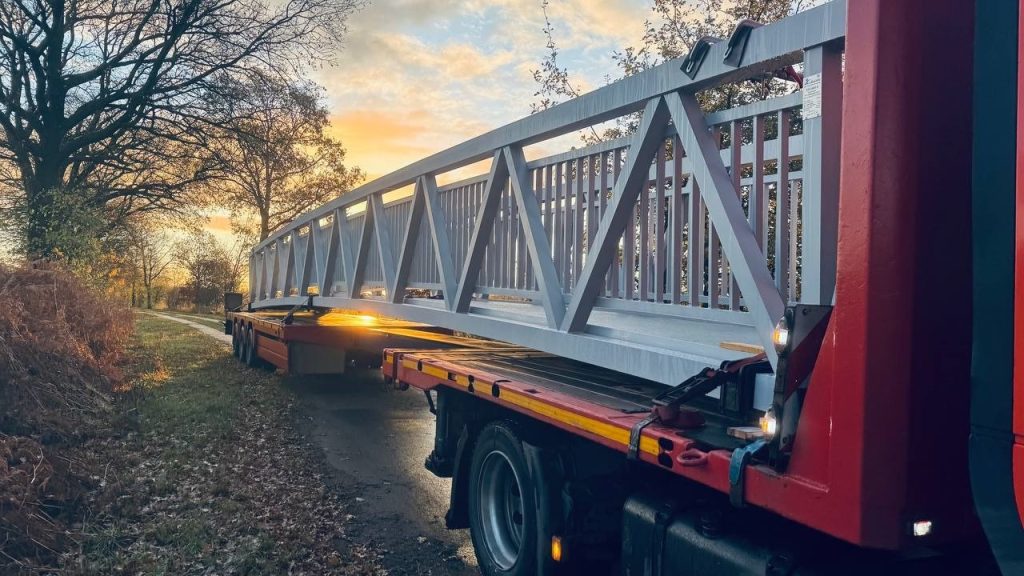
The required Execution Class (EXC) under EN 1090, which determines the inspection procedures and manufacturing quality requirements, should be clearly specified by the procurement documentation.
Different execution classes, based on structural complexity and safety considerations, are appropriate for different projects. The evidence of such aspects as below is required from manufacturers:
- EN 1090 aluminium manufacturer certification;
- certification issued by a notified body;
- documented production traceability;
- applicable Execution Class;
- compliance with factory production requirements.
The identification of the Execution Class at the procurement stage is a way to avoid misunderstandings, simplify tender evaluation, and ensure that all bidders are qualified by the same technical criteria.
What Factory Production Control and Welding Documentation Should Be Available?
The documented Factory Production Control (FPC) system ensures consistent product quality with such typical procurement requirements as:
- Factory Production Control certification;
- Welding Procedure Qualification Records (WPQR);
- Welding Procedure Specifications (WPS);
- inspection and testing reports;
- incoming material inspection records;
- welder qualification certificates;
- material traceability documentation.
Factory Production Control is needed to demonstrate that manufacturing processes are well-monitored, documented, and audited on a regular basis. The particularly valuable aspects for public infrastructure projects are the traceability of raw materials and production records.
What CE Marking and Declaration of Performance Should Be Provided?
Certified aluminium structures placed on the European market should include CE marking with documentation included, where it’s required under the Construction Products Regulation. The requirements of the procurement documents are:
- Declaration of Performance (DoP);
- product identification;
- applicable harmonised standards;
- CE marking documentation;
- references to declared performance characteristics.
The compliance verification and support for transparent procurement decisions is simplified with the request for the complete documentation during supplier evaluation of CE certified aluminium structures.
Which Quality and Environmental Management Certificates Should the Supplier Hold?
Certified management systems are used to prove that a manufacturer operates according to the quality procedures, recognized internationally. The certificates, commonly requested by public procurement documents, are:
- ISO 14001 for Environmental Management;
- ISO 9001 for Quality Management;
- occupational health and safety certifications where applicable.
The certificates must not only exist but be valid and cover the scope of relevant activities for aluminium structure manufacturing.
What Structural Calculations, BIM and CAD Files Should Be Included?
An experienced supplier should be able to provide such digital engineering documentation as:
- structural calculations;
- drawings of CAD;
- BIM models;
- drawings of fabrication;
- drawings of industrial installation;
- connection details;
- information on the foundation interface;
- material specifications.
The engineers can integrate aluminium structures into larger infrastructure with the documents.
BIM compatibility is especially valuable for public projects where long-term asset management and digital project records are a must.
What Installation and Assembly Documentation Is Required?
Proper installation is just as valuable as quality manufacturing, because if assembly instructions are incomplete or incorrectly followed, the overall structure would experience performance issues. The procurement package is as follows:
- industrial installation manuals;
- fastening specifications;
- assembly sequence;
- lifting instructions;
- tolerances;
- anchor installation requirements;
- site safety recommendations.
The documentation package is a must for efficient completion of the project without delays and errors.
What Should Be Included in the Inspection, Handover and Maintenance Package?
The inspection, handover and maintenance package should normally include:
- inspection reports;
- recommended inspection schedule;
- as-built documentation;
- maintenance manuals;
- replacement component information;
- cleaning recommendations;
- warranty documentation;
- repair procedures where applicable.
This list would maximize the service life of aluminium structures and ensure reliable performance, being a must for future asset management.
What Questions Should You Ask Every Aluminium Structure Supplier?
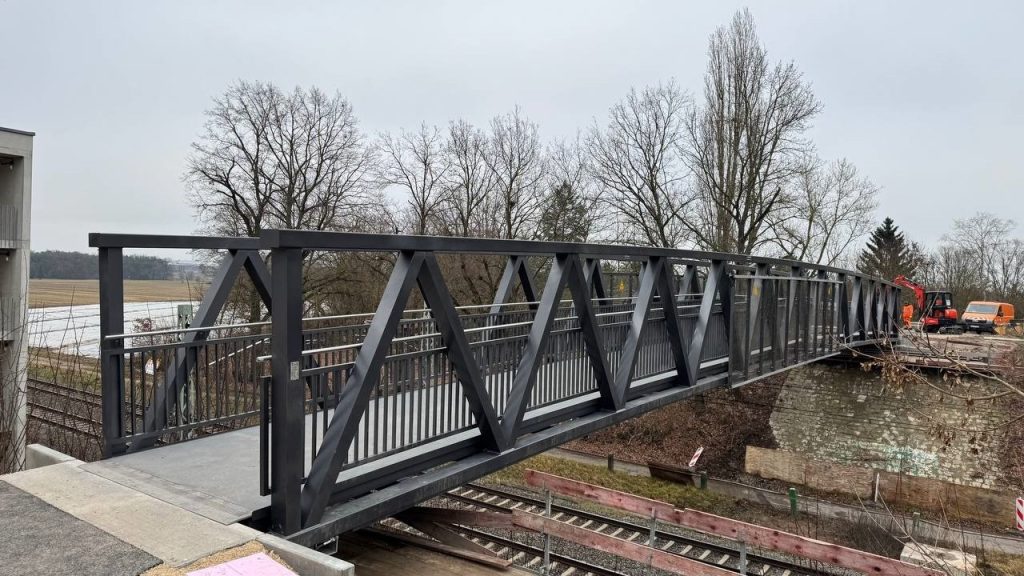
The list of important questions before awarding a contract should include:
- Is there certification under EN 1090?
- Is there CE marking documentation?
- Is a Declaration of Performance available?
- Are structural calculations prepared according to Eurocode 9?
- Is Factory Production Control certified?
- Are there BIM and CAD models?
- Is it possible to document welding qualifications?
- Are the installation documents included?
- Is there a supplement of maintenance manuals?
- What kind of experience in this sphere does the manufacturer have?
Complete engineering documentation is a big plus for the manufacturers, being proof that it’s generally better prepared to create public procurement projects such as industrial walkways.
Can You Download a Procurement Checklist for Aluminium Structures?
Standardized procurement checklists are used by many contracting authorities to simplify supplier evaluation. A downloadable procurement checklist covers:
- project definition;
- Eurocode 9 aluminium structures compliance;
- EN 1090 certification;
- CE marking documentation;
- design loads and environmental conditions;
- Factory Production Control;
- BIM and CAD documentation;
- installation documentation;
- welding qualifications;
- structural calculations;
- inspection and maintenance documentation.
A standardized checklist improves transparency throughout the procurement process.
Are you planning a new infrastructure project or evaluating potential suppliers? Contact our team to request a complete tender documentation pack! We are ready to review the technical requirements of your project and help ensure that your procurement documentation aligns with current standards for European aluminium bridge manufacturer.