


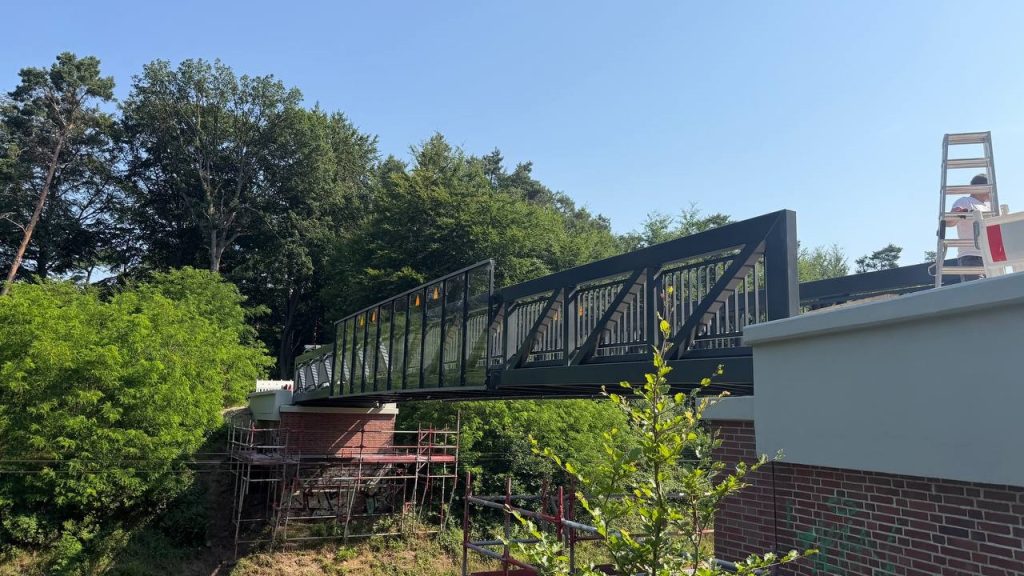
A public tender for an aluminium pedestrian bridge is not only about stating the bridge dimensions and requesting quotations, but also about a well-prepared specification with which suppliers can:
- understand the project’s technical requirements;
- ensure fairly comparison of bids;
- reduce the risk of design changes which cause additional costs.
The tender documentation for infrastructure contractor must define the performance and applicable standards, take into consideration the environmental conditions, and requirements for installation. This rule is related to all types of structures, whether it’s a pedestrian crossing in a city park, a cycle bridge, or a shared-use bridge in a residential area.
The guide presents the essential information that municipalities, engineers, and general contractors should include within the preparation of tender documentation for bridges.
Who Are the Intended Users of the Bridge?
The main goal of aluminium bridge solutions is to cover the needs of its users. That’s why it’s important to define who and how frequently will use the bridge before specifying technical requirements, whether these are the pedestrian bridges, or the bridges for cyclists, maintenance teams, emergency vehicles, or service equipment.
Additional width and different safety features are a must for shared-use bridges. The traffic load must also be considered, because a bridge within a developing residential area or expanding cycling network will be used with higher load over time.
The identification of intended users would allow bridge suppliers to choose the most appropriate structural solution and safety features from the very beginning.
What Span, Width and Required Clearances Should Be Specified?
Accurate geometric requirements for the bridge must be provided, the key among which is the span. This primary design parameter should always be completed with the bridge width and any horizontal or vertical clearance requirements.
The factor which influences the specified dimensions is an object crossed by the bridge, whether it’s a road, railway, river, utility corridor, or another public space. Sufficient width improves both comfort and safety for shared pedestrian and cycle bridges, so users can easily and comfortably pass each other.
The suppliers can prepare technically accurate offers if they get clear dimensional requirements.
What Pedestrian, Cycle and Service Vehicle Loads Should Be Considered?
The structural design of the bridge directly determines the load requirements. The required pedestrian loading must be clearly specified by tender documents according to the applicable design standards. The loads of maintenance vehicles, cyclists, emergency services, or cleaning equipment should also be taken into consideration.
The dynamic effects caused by groups of pedestrians or cyclists are no less meaningful than static loads. Especially on longer-span bridges where the comfort of the user is a priority.
Additionally, there are environmental loads such as wind, snow, and ice that should be defined according to the project location.
The bridge installation contractor who has complete loading information can prepare reliable structural calculations and reduce the possibility of revisions if the tender is successful.
How Should Accessibility, Gradients and Approach Design Be Specified?
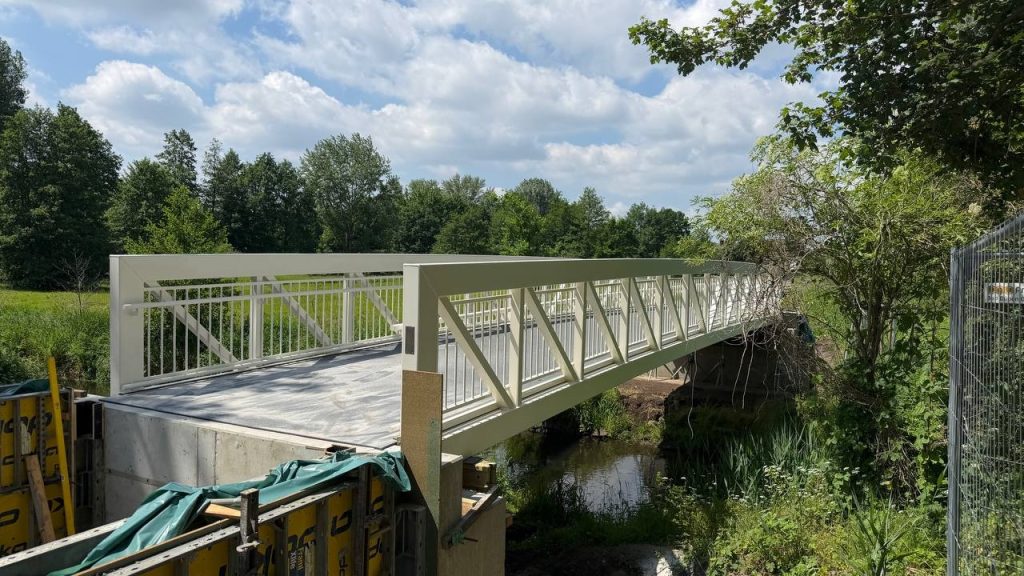
The essential requirement for modern public infrastructure is accessibility. The points which must be defined by tender documents for infrastructure contractor to ensure safe access for all users, such as wheelchair users, cyclists, parents with pushchairs, and people with reduced mobility, are:
- acceptable gradients;
- ramp lengths;
- landings.
Smooth and free transition between the bridge and surrounding paths from unnecessary level differences is a key aspect. Additionally, safety and usability are improved by adequate visibility, clear wayfinding, and comfortable turning areas at bridge entrances.
The accessibility requirements must be addressed early in the project to guarantee compliance with regulations, avoiding expensive design modifications.
What Deck Surface, Drainage and Slip Resistance Requirements Should Be Included?
Safety, maintenance, and long-term performance are parameters maintained by the aluminium bridge deck for pedestrians:
- The preferred deck material and minimum slip resistance must be identified by the specification to provide safe use throughout the year. Special attention to these parameters must be paid in regions with frequent rainfall, snow, or icy conditions.
- One more aspect of durable aluminium structures is careful consideration of drainage, because effective water management protects the construction from standing water, reducing the risk of ice formation, and preserving the deck surface of the deck.
- The tender documentation should also include specific noise reduction, cycling comfort, or maintenance characteristics of the project.
Each project is individual, and there may be additional requirements.
What Should Be Specified for Railings, Lighting and User Safety?
A clear description of safety measures is a must so all suppliers can work to the same requirements. Within the bridge tender should be specified:
- railing height;
- infill design;
- additional protective features required for the bridge location;
- enhanced safety barriers or anti-climb protection for crossings above highways, railways, or waterways;
- lighting where the bridge will be used during evening or nighttime hours to contribute to overall public safety.
The list of additional requirements depends on the exact project, and may include cable management, integrated handrails, emergency access points, or CCTV provisions.
How Should Wind, Salt, Snow and Ice Be Considered?
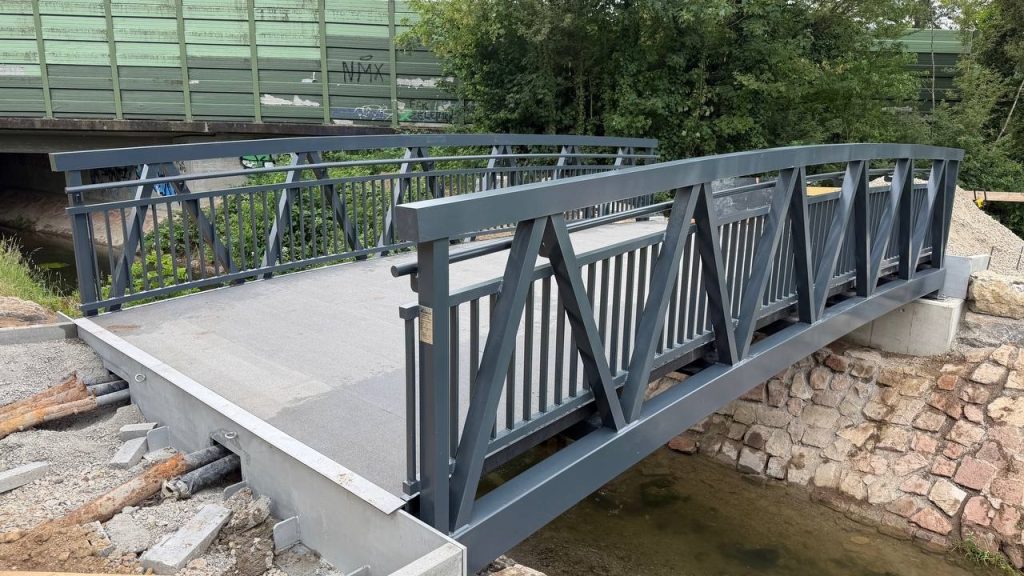
There are environmental conditions that influence both the design and long-term durability of the bridge. That’s why one of the key points to be included in the specification is the local climate (wind exposure, icing conditions, snowfall, coastal environments, flooding risks, or the use of de-icing salts on nearby roads). This factor affects drainage design, structural calculations, material selection, and maintenance within the service life of a bridge.
Aluminium pedestrian bridges are suitable for public infrastructure, being characterized by corrosion resistance in coastal regions and areas with regularly applied road salt. But environmental conditions must be clearly defined for the choice of the most appropriate engineering solution.
What Standards, Structural Calculations and Certification Are Required?
The technical standards for suppliers should be identified by every public bridge tender. The applicable Eurocodes and national regulations governing bridge design should be mentioned by specification.
On the side of suppliers, structural calculations must be provided which demonstrate full compliance with requirements for load capacity, stability, serviceability, and durability.
Also, it’s important to specify the manufacturing and fabrication standards. Each project is individual, so the tender may request:
- marking for CE certified aluminium pedestrian bridge;
- EN 1090 compliance;
- quality management documentation;
- material certificates;
- welding qualifications;
- inspection records.
The procurement teams which have complete technical documentation can evaluate submissions based on engineering quality, manufacturing capability, and regulatory compliance.
What Transport and Installation Constraints Should Be Considered?
Project costs and construction schedules are highly influenced by transport and installation requirements. The list of aspects that must be included in tender documents is as follows:
- delivery access;
- lifting restrictions;
- available crane capacity;
- road closures;
- railway possessions;
- other limitations.
Off-site prefabrication or modular aluminium pedestrian bridge components may provide practical advantages where installation time is limited.
Early identification of these constraints would enable bridge manufacturer to develop accurate project schedules and realistic installation methods.
What Documents Should Suppliers Include in the Tender?
The tender should define which documents every supplier is expected to submit to simplify technical evaluation. The list of typical documentation is as follows:
- general arrangement drawings;
- preliminary structural calculations;
- documentation for quality assurance;
- methodology for installation;
- project schedule;
- specifications of the materials;
- manufacturing certifications;
- recommendations for maintenance;
- information about warranty;
- relevant references.
Objective comparison of proposals becomes easier with standardizing submission requirements and choice of the most suitable solution.
What Should Your Tender Specification Checklist Include?
Before the publication of a tender, it’s necessary to verify that all essential project information is included in the specification:
- intended category of the bridge users;
- span, width, and clearances;
- loads (pedestrian, cycle, and service vehicle);
- requirements for accessibility;
- surface, drainage, and slip resistance of the deck;
- required features for railings, lighting, and safety;
- environmental conditions(wind, snow, salt, so on);
- required standards and certifications;
- transport and installation constraints;
- supplier documentation.
A complete specification is key to delivering a bridge that perfectly corresponds to both technical and operational requirements.
Ready to Start Your Bridge Project?
Are you preparing a public tender or planning a new aluminium pedestrian bridge?
Our company is a bridge manufacturer, ready to help you define the right configuration to cover your needs.
Don’t hesitate to send us your required span, the location of the project, and the required design load. We can prepare a preliminary bridge configuration based on this information to support your tender documentation.